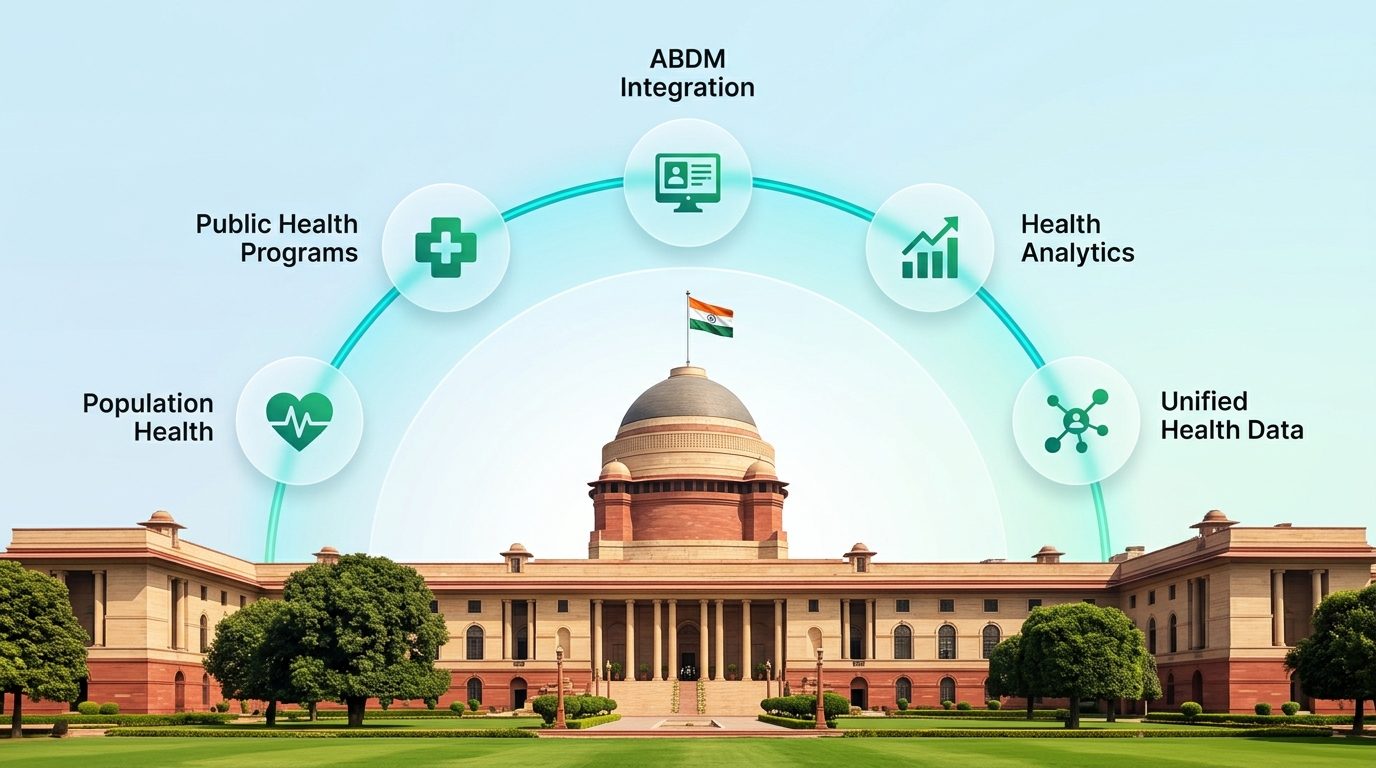
As the world’s largest government-funded health assurance initiative, Ayushman Bharat Pradhan Mantri Jan Arogya Yojana (PM-JAY)—now expanded to include senior citizens aged 70 and above across socioeconomic strata—has fundamentally reshaped the demand curve for secondary and tertiary inpatient care across India. With hundreds of millions of Ayushman cards issued and state health schemes converging around the National Health Authority (NHA) ecosystem, public-private partnership healthcare India has entered a new era where private multi-specialty hospitals play an indispensable role in delivering surgical, oncology, cardiac, renal, and maternal-child interventions.
Yet many private hospital promoters and chief financial officers view scheme participation through an outdated lens—worrying that package tariff ceilings and administrative documentation overhead will strain margins. In practice, hospitals that combine Ayushman Bharat PM-JAY hospital empanelment with automated clinical pathway management, National Health Claims Exchange (NHCX) integration, and the Digital Health Incentive Scheme DHIS NHA are unlocking high-occupancy operating leverage, faster working-capital turnaround, and direct digital adoption incentives.
The Changing Economics of PM-JAY for Private Multi-Specialty Hospitals
Why are leading regional and corporate hospital chains actively dedicating capacity—and even building specialized value-care wings—for PM-JAY and state scheme beneficiaries? Three structural shifts explain the new unit economics:
- Expansion of the Insured Senior Citizen Cohort (70+ Years): The universal inclusion of citizens aged 70 and above under PM-JAY brings a high-need demographic requiring cataract surgeries, joint replacements, cardiac interventions, dialysis, and oncology care directly into empaneled private hospitals.
- Rationalization of Health Benefit Packages (HBP): Successive revisions to the PM-JAY health benefit package HBP 2.2 (and subsequent updates) have introduced stratified pricing based on NABH accreditation tiers, metropolitan vs. non-metro classifications, and add-on high-end implant/procedure combinations—rewarding accredited hospitals with higher package realizations.
- Marginal Cost Absorption on Fixed Hospital Infrastructure: Once a 200-bed hospital’s fixed overhead (building lease/depreciation, 24×7 ICU nursing rosters, central diagnostics, and modular OT infrastructure) is covered by baseline private and TPA volume, incremental scheme admissions running at 85%+ bed occupancy generate strong contribution margins—provided administrative claim processing costs are kept near zero through software automation.
How the Digital Health Incentive Scheme (DHIS) Rewards Digitized Hospitals
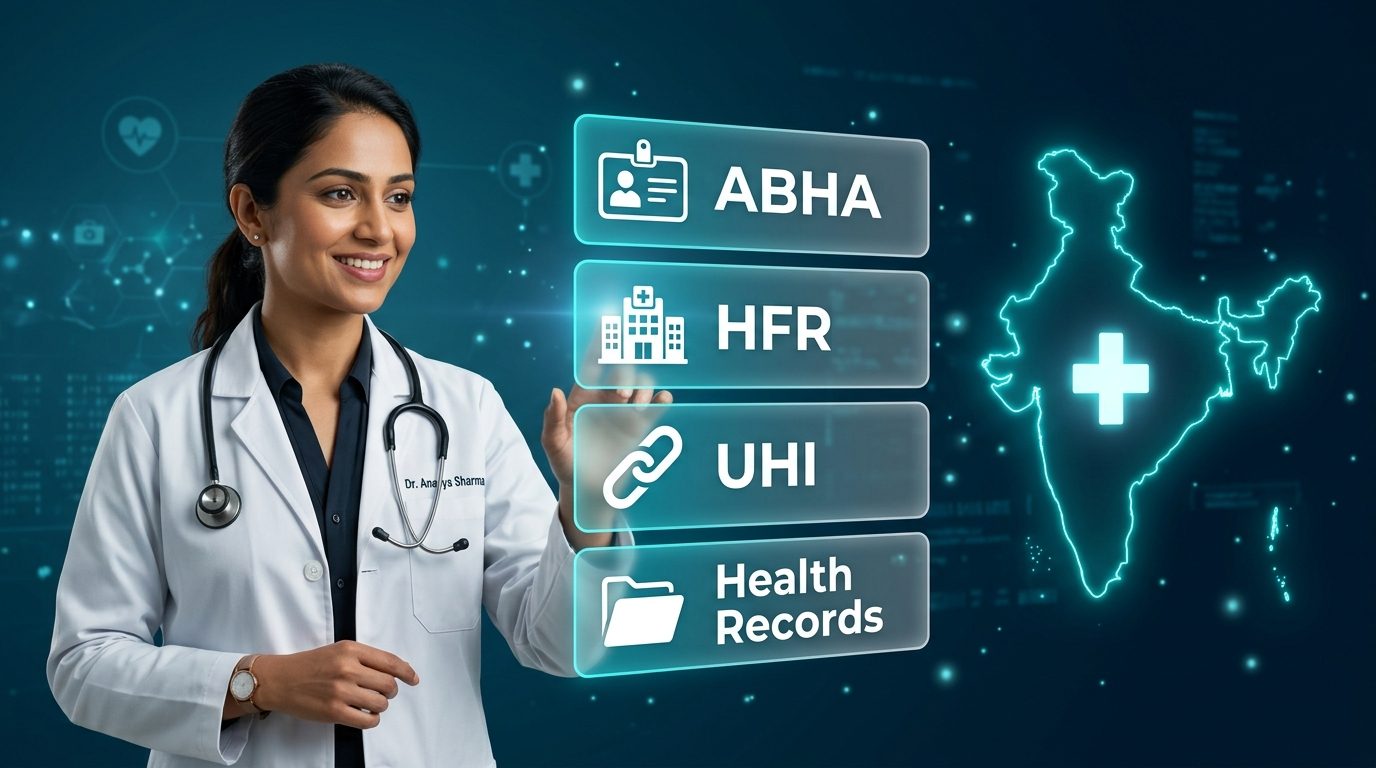
To accelerate nationwide adoption of the Ayushman Bharat Digital Mission (ABDM), the National Health Authority launched the Digital Health Incentive Scheme DHIS NHA. Rather than mandating unfunded IT compliance, DHIS offers direct financial incentives to hospitals, clinics, diagnostic laboratories, and digital solution companies that generate and link digital health records to patient ABHA accounts.
Hospitals maximize their DHIS eligibility by embedding two frictionless workflows into their daily operations:
1. ABDM Scan-and-Share at Every Outpatient and Diagnostic Counter
Deploying ABDM scan and share OPD transformation QR tokens at outpatient reception, emergency registration, and diagnostic sample collection desks allows patients to share verified ABHA demographics in seconds. This immediately boosts the facility’s daily ABHA-linked transaction count without adding front-desk staff.
2. Automated Care-Context Linking Across OPD, LIMS, and IPD
Every time an outpatient e-prescription, a LIMS pathology report, a radiology study, or an inpatient discharge summary is finalized inside the HIS, the interoperability engine automatically packages the NRCeS-compliant HL7 FHIR R4 bundle and registers the Care Context with the ABDM HIE-CM gateway—turning routine clinical documentation into verifiable DHIS-qualifying transactions.
Eliminating PM-JAY Claim Rejections Through Automated HBP Pathway Checks
The single biggest determinant of whether a private hospital makes or loses money on Ayushman Bharat PM-JAY hospital empanelment is its First-Pass Claim Approval Rate and Average Length of Stay (ALOS) discipline. Under PM-JAY and state scheme rules, each Health Benefit Package specifies mandatory pre-authorization evidence (such as pre-op diagnostic images, clinical photographs, or specific lab thresholds) and post-procedure discharge proofs.
When hospital coordinators rely on manual checklists to assemble these documents, missing attachments lead to claim rejections or prolonged query pendencies. An enterprise HIS engineered for Indian scheme management automates this governance at three checkpoints:
- Checkpoint 1 — Admission & Package Selection: When a scheme beneficiary is admitted via biometric/ABHA verification, the HIS automatically loads the exact PM-JAY health benefit package HBP 2.2 ruleset—displaying the included bed days, approved implant ceiling, and mandatory pre-op investigations directly on the treating doctor’s CPOE screen.
- Checkpoint 2 — Intra-Stay Consumable & ALOS Guardrails: As pharmacy consumables and diagnostics are ordered in the ward, the billing engine tracks real-time direct cost against the package tariff, alerting the unit coordinator if length of stay or non-essential investigations approach margin thresholds.
- Checkpoint 3 — Pre-Flight Claim Validation Before Dispatch: Prior to submitting the final claim via NHCX or the state TMS portal, the system verifies that 100% of mandatory pre-op/post-op clinical documents, geotagged/timestamped artefacts, and signed discharge summaries are attached—virtually eliminating technical rejections.

100% Complete), Target vs. Actual ALOS (2.5 / 3.0 Days), Implant Barcode Traceability, and a “Ready for Instant NHCX Submission” status badge.Balancing Multi-Payer Operations Without Compromising Patient Experience
Forward-looking hospital chains in India no longer segregate scheme patients into inferior manual workflows. By standardizing registration, clinical charting, eMAR nursing, and NHCX claim automation on a single unified platform, hospitals can serve cash, corporate, private TPA, and PM-JAY beneficiaries with identical clinical dignity and operational speed.

Unlocking Scheme & Digital Incentive Excellence with OneHealthGrid
OneHealthGrid equips private multi-specialty hospitals, medical colleges, and diagnostic networks with native ABDM M1–M3 certification, Scan-and-Share lobby kiosks, NHCX FHIR R4 claim engines, and real-time package profitability analytics—enabling your institution to participate profitably and seamlessly in India’s national health assurance mission.
Accelerate Your Healthcare Digital Transformation with OneHealthGrid
Looking to implement enterprise-grade interoperability, clinical intelligence, and national digital health compliance across your hospital network? Explore our OneHealthGrid PM-JAY & DHIS Hospital Enablement Solutions or schedule a personalized architecture consultation with our healthcare engineering specialists.
National Standards & Regulatory References: Ayushman Bharat Digital Mission (ABDM) • National Health Authority (NHA) • NRCeS HL7 FHIR R4 Implementation Guides