
Managing public health across India’s states and districts is one of the most complex data engineering challenges in the world. A single Indian state health department oversees thousands of Ayushman Arogya Mandirs (Sub-Health Centers and Primary Health Centers), ratusan of Community Health Centers (CHCs), Sub-Divisional Hospitals, District Hospitals, and Government Medical Colleges—serving tens of millions of citizens across urban slums, agrarian districts, and remote tribal or hilly terrains.
Historically, public health monitoring relied on monthly paper tallies compiled manually at the block level and uploaded weeks after clinical events occurred. By the time a spike in dengue fever, acute diarrheal disease, or maternal anemia appeared in a state-level spreadsheet, the window for preventive containment had already closed. Modern population health analytics India replaces retrospective monthly reporting with real-time, ABHA-anchored epidemiological intelligence—empowering state health secretaries, National Health Mission NHM dashboards, and district chief medical officers (CMOs) to shift from reactive crisis management to predictive, geo-targeted intervention.
Unifying the Four-Tier Public Health Data Pyramid
A resilient state or district population health platform must aggregate clinical, diagnostic, and field-worker data seamlessly across four administrative tiers without requiring manual re-entry:
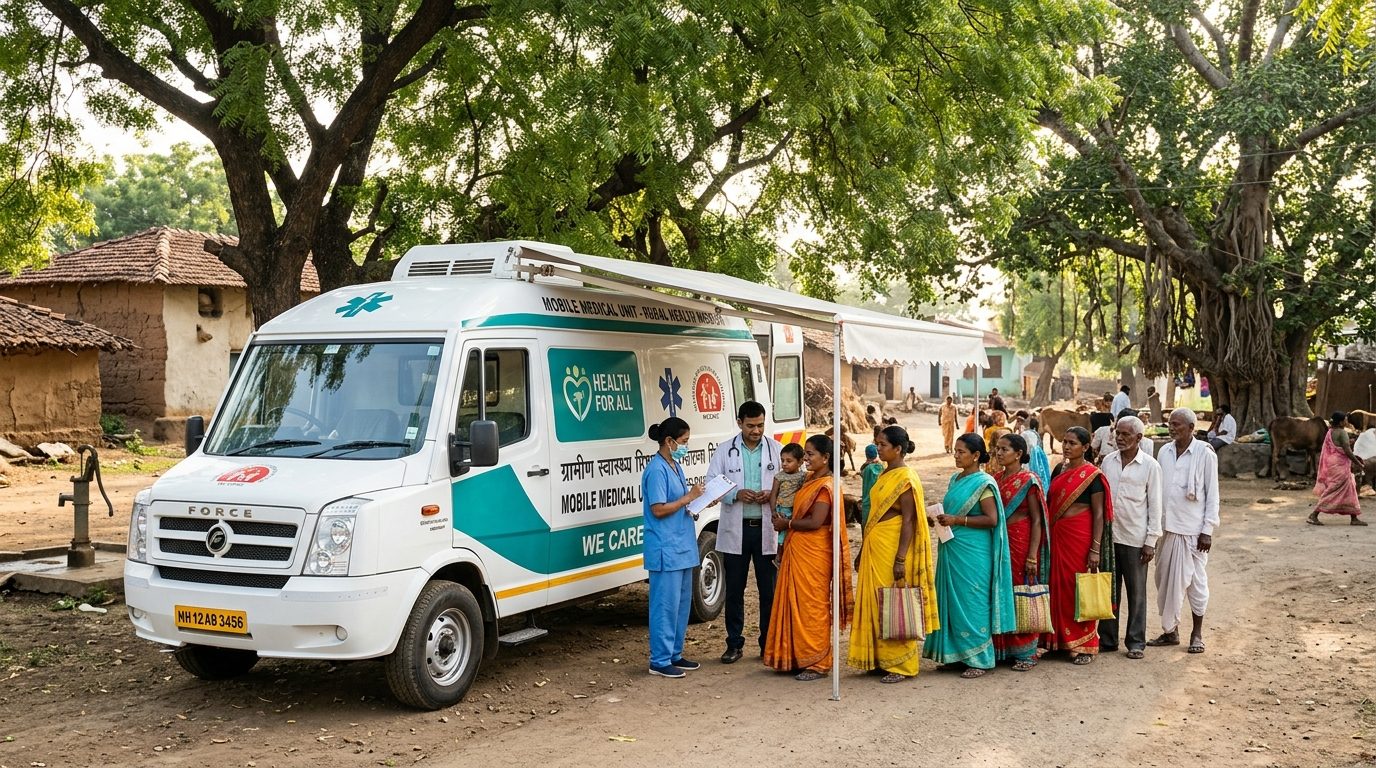
- Tier 1 — Community & Frontline Outreach (ASHA & ANM Mobile Workflows): Offline-capable mobile applications used by Accredited Social Health Activists (ASHAs) and Auxiliary Nurse Midwives (ANMs) during household surveys, antenatal checkups, immunization drives, and point-of-care NCD screenings.
- Tier 2 — Primary Care (Ayushman Arogya Mandirs & PHCs): Outpatient consultations, rapid diagnostic tests (malaria, dengue, typhoid, blood glucose, hemoglobin), teleconsultation referrals via eSanjeevani, and essential drug dispensing.
- Tier 3 — Secondary & District Referral Hubs (CHCs & District Hospitals): Inpatient admissions, C-section and surgical deliveries, central laboratory LIMS microbiology/biochemistry panels, blood bank stock, and SNCU (Special Newborn Care Unit) telemetry.
- Tier 4 — State & National Surveillance Command Centers: Real-time aggregation engines feeding State Health Society dashboards, the Integrated Health Information Platform (IHIP / IDSP), and ABDM registries.
Real-Time Epidemiological Intelligence: IDSP & GIS Outbreak Surveillance
Under India’s Integrated Disease Surveillance Programme (IDSP) and its modernized Integrated Health Information Platform (IHIP), surveillance tracks three complementary data streams: S-Form (Syndromic) reported by frontline health workers based on symptom clusters (e.g., fever with rash, acute flaccid paralysis, watery diarrhea), P-Form (Presumptive) recorded by clinicians in PHC/hospital OPDs, and L-Form (Laboratory Confirmed) generated by diagnostic LIMS analyzers.
When these three streams are unified inside an IDSP real-time disease surveillance GIS analytics engine, district epidemiologists gain three critical capabilities:
- Spatio-Temporal Cluster Detection: Instead of waiting for laboratory confirmation across hundreds of cases, spatio-temporal algorithms detect statistically significant clusters of syndromic fever or acute gastroenteritis at the village, ward, or pin-code level within 24 hours—automatically overlaying vector-breeding indices, rainfall patterns, and water-testing data on a live GIS map.
- Automated LIMS-to-Surveillance Triggering: The moment a district hospital or private partner laboratory validates a positive dengue ELISA, malaria rapid test, chikungunya, leptospirosis, or tuberculosis result (coded in LOINC and SNOMED CT), the L-Form payload is pushed automatically without human clerical delay.
- Dynamic Drug & Buffer Stock Pre-Positioning: Outbreak heatmaps link directly to the state medical corporation’s drug warehouse supply chain—triggering proactive dispatch of IV fluids, ORS packets, antimalarials, or platelet kits to blocks showing early upward trajectory slopes.
Longitudinal Cohort Tracking: Maternal-Child Health (RMNCH+A) and NCD Cascades
Beyond infectious disease outbreaks, India’s public health priority centers on reducing Maternal Mortality Ratio (MMR), Infant Mortality Rate (IMR), and the surging burden of Non-Communicable Diseases (hypertension, diabetes, and oral/breast/cervical cancers). Aggregate headcounts are insufficient for these programs; health systems require longitudinal cohort analytics anchored to each citizen’s ABHA identifier:
1. High-Risk Pregnancy (HRP) and Immunization Cohort Analytics
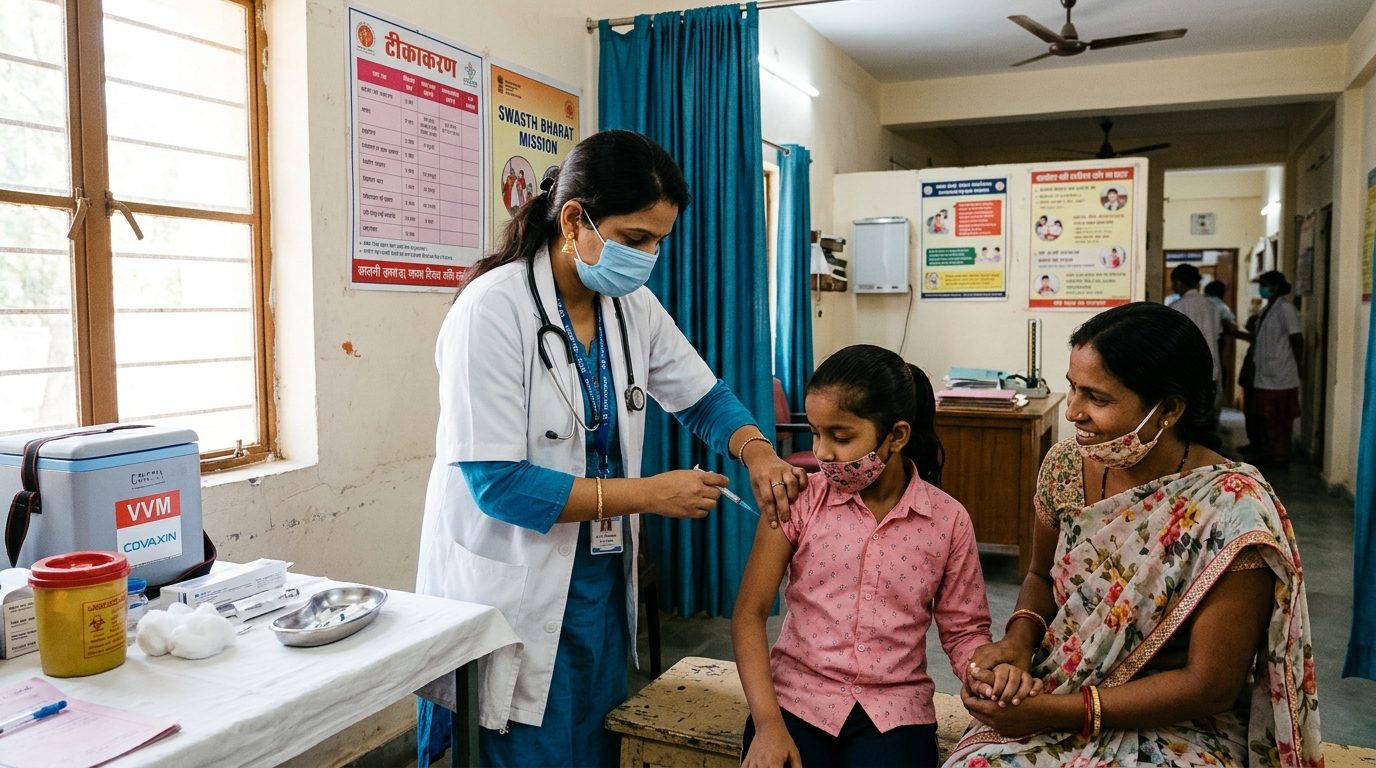
Effective maternal and child health cohort tracking follows every expectant mother from first-trimester registration through all four mandatory Antenatal Care (ANC) checkups, institutional delivery, and postnatal care. If an expectant mother in a remote block records a hemoglobin level below 7 g/dL (severe anemia) or elevated blood pressure indicative of pre-eclampsia at a PHC, the analytics engine automatically flags her in the High-Risk Pregnancy Command Registry—scheduling ANM home visits, tracking iron-sucrose infusion compliance, and alerting the nearest First Referral Unit (FRU) with C-section and blood-transfusion readiness prior to her expected delivery date.
2. Population-Scale NCD Screening and Treatment Cascade Analytics
Under the National Programme for Prevention and Control of Non-Communicable Diseases (NP-NCD), millions of citizens aged 30+ are screened at Ayushman Arogya Mandirs. However, screening without follow-up fails to prevent strokes or renal failure. NCD screening analytics PHC CHC visualizes the complete Care Cascade Funnel:
- Population Eligible (30+ years) → Screened via CBAC/Point-of-Care → Referred to PHC Medical Officer → Confirmed Diagnosis Initiated on Treatment → Retained on Monthly Medication Refills → Achieved Controlled BP / Glycemic Target at 6 Months.
Empowering Public Health Governance with OneHealthGrid
Whether deployed for a state health department, a smart-city municipal health corporation, or a CSR-funded rural healthcare foundation, OneHealthGrid provides an offline-resilient, ABDM-compliant public health platform and real-time GIS analytics suite engineered for national scale.
Accelerate Your Healthcare Digital Transformation with OneHealthGrid
Looking to implement enterprise-grade interoperability, clinical intelligence, and national digital health compliance across your hospital network? Explore our OneHealthGrid Population Health & Disease Surveillance Platform or schedule a personalized architecture consultation with our healthcare engineering specialists.
National Standards & Regulatory References: Ayushman Bharat Digital Mission (ABDM) • National Health Authority (NHA) • NRCeS HL7 FHIR R4 Implementation Guides