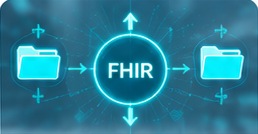
When healthcare technology leaders discuss connecting hospitals, laboratories, and public health registries across India, the conversation often stops at APIs and transport protocols. Moving a JSON payload over HTTPS or packaging an outpatient summary into an HL7 FHIR R4 container solves syntactic interoperability—the ability of two software systems to exchange data structures without parsing errors. However, if Hospital A records a diagnosis as "T2DM with diabetic nephropathy", Clinic B types "NIDDM - renal complication", and Laboratory C labels the accompanying test "HbA1c (Glycosylated Hb)" with a local proprietary test code, receiving software cannot safely aggregate, analyze, or trigger clinical decision support across those records.
Solving this meaning gap is the domain of semantic interoperability in Indian healthcare. By anchoring clinical documentation, laboratory observations, medication orders, and insurance claims to standardized international vocabularies—specifically SNOMED CT, LOINC, and ICD-10—Indian healthcare enterprises can unlock longitudinal patient timelines, automated ABDM exchange, and AI-ready clinical analytics.
Syntactic vs. Semantic Interoperability: Why JSON Alone Is Not Enough
To build a resilient digital health architecture, hospital CIOs and chief medical information officers (CMIOs) must design across three distinct layers of interoperability:
- Foundational & Structural (Syntactic) Interoperability: Defines the envelope and wire format—such as HL7 FHIR R4 resources (
Patient,Encounter,Observation,MedicationRequest), HL7 v2 pipe-delimited messages, and NEMA DICOMweb imaging endpoints. - Semantic Interoperability: Ensures that the clinical concepts inside those envelopes carry unambiguous, machine-computable codes drawn from globally governed ontologies so that receiving EMRs, clinical decision support (CDS) engines, and public health registries interpret the exact same clinical meaning.
- Organizational & Governance Interoperability: Encompasses the legal, privacy, and consent frameworks—such as India’s DEPA electronic consent framework under ABDM and the DPDP Act 2023—governing who may access and act upon shared records.
The Role of NRCeS and Free National Terminology Licensing in India
Historically, licensing international clinical vocabularies posed a financial and technical barrier for mid-sized Indian hospitals and software vendors. To remove this barrier, the Ministry of Health and Family Welfare established the National Resource Centre for EHR Standards (NRCeS) at C-DAC Pune.
Because India is a national member of SNOMED International, SNOMED CT NRCeS adoption India is available at zero license cost to every hospital, clinic, diagnostic laboratory, and healthcare software provider operating within India. Beyond providing the core international release, NRCeS maintains specialized India Extensions—including localized clinical terms, Ayush and integrative medicine concepts, and curated Common Drug Codes for India (CDCI) mapped to generic formulations, dose forms, and routes of administration commonly prescribed in Indian outpatient and inpatient settings.
Mapping the Big Three Clinical Vocabularies Across the Hospital
A single clinical vocabulary is not designed to cover every workflow in a multi-specialty hospital. True clinical terminology governance HIS assigns each standard to the specific domain where it excels:
1. SNOMED CT for Point-of-Care Clinical Documentation
SNOMED CT (Systematized Nomenclature of Medicine — Clinical Terms) is a poly-hierarchical clinical ontology containing over 350,000 active concepts linked by millions of semantic relationships. Unlike flat statistical lists, SNOMED CT understands clinical relationships (for example, recognizing that Acute Myocardial Infarction is both an Ischemic Heart Disease and a Myocardial Disorder). In an enterprise HIS, SNOMED CT should govern:
- Chief complaints and presenting symptoms,
- Clinical findings and working diagnoses in OPD and IPD progress notes,
- Surgical and bedside procedures,
- Allergies, intolerances, and anatomical body sites.
2. LOINC for Laboratory (LIMS) and Clinical Vitals
LOINC (Logical Observation Identifiers Names and Codes) is the universal standard for identifying laboratory tests, microbiology panels, clinical vital signs, and standardized survey instruments. Implementing LOINC laboratory coding for LIMS ensures that every test parameter distinguishes six critical axes: Component/Analyte (e.g., Glucose), Property (Mass concentration), Timing (Point in time), System/Specimen (Serum/Plasma), Scale (Quantitative), and Method. When a patient’s ABHA record aggregates CBC, lipid profile, and renal function results across three different diagnostic chains over five years, LOINC codes allow the clinician’s EMR to plot a single, continuous trend graph without unit-conversion or analyte mismatches.
3. ICD-10 (and ICD-11) for Morbidity Classification, NHCX Claims, and Public Health
Managed by the World Health Organization (WHO), ICD-10 provides mutually exclusive diagnostic categories optimized for epidemiological reporting, mortality/morbidity statistics, and insurance reimbursement on the National Health Claims Exchange (NHCX) and Ayushman Bharat PM-JAY.

Solving the Clinician UX Challenge: How to Capture Codes Without Slowing Doctors Down
The single greatest reason terminology projects fail in Indian hospitals is forcing busy clinicians to search through complex code browsers or memorize numeric identifiers during a 4-minute outpatient consultation. Doctors think in clinical narratives and specialty shorthand—not ontology trees.
To achieve 95%+ structured coding compliance without clinician pushback, modern platforms decouple the Interface Terminology (what the doctor types) from the Reference Terminology (what the database stores):
- Specialty-Tuned Elastic Auto-Suggest (ECL Constraints): When an ophthalmologist types
"cataract", the search box applies SNOMED CT Expression Constraint Language (ECL) filters to prioritize ophthalmic disorders rather than displaying 200 unrelated systemic entries. - Automated Cross-Mapping (SNOMED CT → ICD-10): The treating doctor selects the clinically rich SNOMED CT finding once in the EMR. In the background, the HIS uses official SNOMED-to-ICD-10 map tables to auto-populate the billing and NHCX insurance claim with the corresponding ICD-10 code—eliminating duplicate coding by medical records department (MRD) staff.
- Pre-Mapped LIMS Analyzer Catalogs: Laboratory technicians never select LOINC codes manually per sample; LOINC codes and UCUM (Unified Code for Units of Measure) units are bound once at the LIMS test-master level and transmitted automatically in every HL7 FHIR
ObservationandDiagnosticReport.

"Type 2 diabetes with retinopathy" in a clean OPD smart-search bar, which instantly binds SNOMED CT Concept 422034002 for the EMR & ABDM Care Context while automatically mapping ICD-10 code E11.3 for the NHCX insurance claim desk.Semantic Governance as the Foundation for Responsible Healthcare AI
As Indian hospital groups evaluate clinical AI assistants, predictive deterioration scores, and population health analytics, clean semantic data is the ultimate prerequisite. AI models trained or prompted on noisy, unstandardized free text hallucinate or miss critical contraindications. By embedding OneHealthGrid’s NRCeS-aligned terminology engine across your HIS, LIMS, and pharmacy workflows, your organization builds a high-integrity clinical data asset ready for ABDM interoperability, NHCX claim automation, and next-generation clinical intelligence.
Accelerate Your Healthcare Digital Transformation with OneHealthGrid
Looking to implement enterprise-grade interoperability, clinical intelligence, and national digital health compliance across your hospital network? Explore our OneHealthGrid ABDM & Semantic Interoperability Services or schedule a personalized architecture consultation with our healthcare engineering specialists.
National Standards & Regulatory References: Ayushman Bharat Digital Mission (ABDM) • National Health Authority (NHA) • NRCeS HL7 FHIR R4 Implementation Guides