
Pathology laboratories and diagnostic imaging departments are the high-throughput engines of modern clinical medicine. In a typical 300-bed Indian multi-specialty hospital or regional diagnostic reference chain, the laboratory processes 2,000 to 10,000 test parameters daily across biochemistry, hematology, immunoassay, coagulation, histopathology, and microbiology, while the radiology department performs hundreds of X-ray, ultrasound, Doppler, CT, and MRI studies.
Yet in far too many healthcare facilities, “integration” between the Hospital Information System (HIS), the Laboratory Information Management System (LIMS), and the Radiology Information System / Picture Archiving and Communication System (RIS/PACS) is only half-built. When lab technicians manually re-type patient demographics into analyzer consoles or transcribe printed analyzer strips into the software—and when radiologists dictate reports into standalone word processors disconnected from the DICOM image viewer—transcription errors multiply, turnaround times (TAT) balloon, and NABL diagnostic turnaround time compliance suffers. True LIMS and RIS PACS integration India eliminates every manual handoff through end-to-end bi-directional engineering.
Anatomy of a True Bi-Directional LIMS Workflow (Order → Barcode → Analyzer → EMR)
A high-integrity laboratory workflow is governed by a closed six-stage digital loop where human hands never transcribe patient names or numeric test values:
1. CPOE Investigation Order & Pre-Analytical Barcode Generation
The moment an outpatient consultant, emergency physician, or inpatient resident places a diagnostic order (e.g., Complete Blood Count, HbA1c, Renal Function Panel, Troponin-I) inside the HIS, the order is transmitted immediately to the LIMS. At the phlebotomy station or inpatient bedside, the system calculates tube consolidation logic—determining the exact specimen containers required (EDTA lavender-top, SST gold-top, Citrate blue-top)—and prints unique 1D/2D specimen barcodes encoding the Sample ID, Container Type, and Priority (STAT vs. Routine).
2. Bi-Directional ASTM and HL7 v2 Analyzer Interfacing
Once the barcoded vacutainer is centrifuged and loaded onto the automated analyzer rack (from manufacturers such as Roche, Abbott, Beckman Coulter, Siemens, Sysmex, or Bio-Rad), the analyzer’s optical scanner reads the tube barcode and queries the LIMS host via an ASTM and HL7 v2 laboratory analyzer interface (ASTM E1381/E1394 or HL7 v2.5.1 QBP/RSP).
- Host Query Download: The LIMS responds in milliseconds with the exact test assays ordered for that barcode—so no technician ever manually programs tests on the machine.
- Automated Result Upload & LOINC Mapping: As soon as the assay finishes, raw numeric values, instrument flags, and scattergrams/histograms stream back from the analyzer into the LIMS, where each parameter is bound to its standardized LOINC code and UCUM unit of measure.
3. Delta Checks, Auto-Verification Rules, and Pathologist Sign-Off
Before results are released to the clinical chart, the LIMS executes real-time quality governance: comparing results against Internal Quality Control (IQC) Westgard rules, running Delta Checks against the patient’s previous baseline (e.g., flagging an implausible drop in hemoglobin from 13.2 to 6.8 g/dL that could indicate a diluted intravenous line draw), and triggering reflex testing when warranted. Routine normal results passing all rules can be auto-verified, while abnormal or complex panels are highlighted on the consultant pathologist’s validation workbench.
DiagnosticReport to EMR, Patient WhatsApp/Portal & ABDM Care Context.Modernizing Radiology: DICOM Modality Worklist (MWL) and Zero-Footprint DICOMweb
In diagnostic imaging, manual data entry at the modality console is the #1 cause of “orphaned” PACS studies. If a night-shift CT technician slightly misspells a patient’s name or mistypes a digit of the UHID on the scanner console, the resulting DICOM images fail to link to the patient’s longitudinal EHR chart.
Implementing a standards-compliant DICOM Modality Worklist MWL and DICOMweb pipeline eliminates this failure mode completely:
- Automated DICOM Modality Worklist (
C-FINDMWL): When a radiology order is billed or authorized in the HIS/RIS, the patient’s verified UHID, Name, Age, Gender, Accession Number, and requested procedure code are pushed to the RIS MWL broker. At the X-ray, ultrasound, CT, or MRI console, the radiographer simply selects the patient from the live worklist—guaranteeing 100% header accuracy. - MPPS (Modality Performed Procedure Step) & PACS Storage (
C-STORE/STOW-RS): As the scan begins and finishes, the modality updates the RIS status (In Progress→Exam Completed), triggers automatic contrast/consumable inventory deduction, and archives the DICOM series to the PACS. - Zero-Footprint HTML5 DICOMweb Viewing (
QIDO-RS,WADO-RS): Instead of requiring doctors in the OPD or ICU to install proprietary desktop viewer plugins, modern EHRs embed a zero-footprint DICOMweb viewer directly inside the browser. Clicking an imaging link inside the patient’s chart opens multi-planar reconstructions (MPR), window/level adjustments, measurement calipers, and the radiologist’s signed structured report side-by-side on any workstation or tablet.

HL7 ORM / FHIR ServiceRequest) → DICOM Modality Worklist (MWL) to CT/MRI/USG Scanner → PACS Archive → Radiologist Structured Reporting & AI Triage → Browser-Native Zero-Footprint DICOMweb (WADO-RS) Viewer inside the Clinician’s EHR.Automated Critical Value Escalation for NABH and NABL Compliance
Both NABL (ISO 15189) and NABH accreditations enforce strict auditing around panic / critical diagnostic values—such as a serum potassium of 6.9 mEq/L, a blood glucose of 38 mg/dL, a platelet count of 14,000 /µL, or an acute tension pneumothorax on chest X-ray.
Relying on a lab technician to manually dial a ward landline extension that may be busy or unanswered creates dangerous delays. An integrated automated critical lab value escalation engine enforces a closed-loop digital protocol:
- Instant Multi-Channel Push: The moment a critical value is validated in the LIMS or RIS, an high-priority alert fires simultaneously on the ward nursing station dashboard, the resident doctor’s HIS workbench, and via encrypted mobile/SMS notification to the admitting consultant.
- Time-Bound Escalation Ladder: If the primary resident does not electronically acknowledge the critical alert within 15 minutes, the system automatically escalates to the senior registrar and ICU/ward nursing supervisor—recording the exact notification timestamp, acknowledging clinician HPR ID, and read-back confirmation in the NABL/NABH audit log.
Unifying Diagnostics and Clinical Care with OneHealthGrid
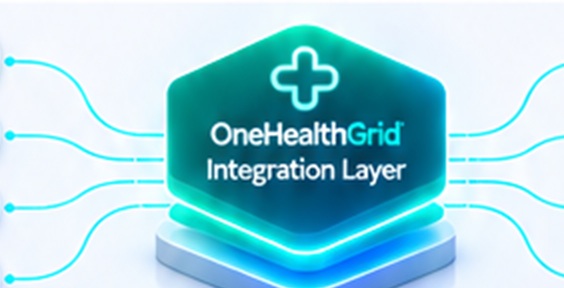
With OneHealthGrid, hospitals and diagnostic chains gain native ASTM/HL7 v2 analyzer drivers, LOINC/SNOMED CT semantic mapping, DICOM Modality Worklists, zero-footprint DICOMweb viewing, and automated ABDM DiagnosticReportRecord publishing—turning your laboratory and radiology departments into real-time engines of clinical excellence.
Accelerate Your Healthcare Digital Transformation with OneHealthGrid
Looking to implement enterprise-grade interoperability, clinical intelligence, and national digital health compliance across your hospital network? Explore our OneHealthGrid Cloud LIMS, RIS & PACS Integration Suite or schedule a personalized architecture consultation with our healthcare engineering specialists.
National Standards & Regulatory References: Ayushman Bharat Digital Mission (ABDM) • National Health Authority (NHA) • NRCeS HL7 FHIR R4 Implementation Guides