
While much of the media conversation around healthcare technology in India focuses on flagship corporate hospitals in New Delhi, Mumbai, Bengaluru, and Chennai, the true epicenter of India’s healthcare capacity expansion over the next decade lies in Tier-2 and Tier-3 cities. From Indore, Jaipur, Lucknow, Surat, and Nagpur to Coimbatore, Madurai, Visakhapatnam, Bhubaneswar, Patna, and Guwahati, regional multi-specialty hospitals (typically ranging from 50 to 300 beds) deliver the vast majority of secondary and tertiary inpatient care for India’s population.
Triggered by rising health insurance penetration, Ayushman Bharat PM-JAY empanelment, private equity investments in regional hospital roll-ups, and patient demand for modern diagnostics, these institutions are growing rapidly. Yet digitizing Tier-2 and Tier-3 hospitals India presents a distinct set of engineering, financial, and human-adoption challenges that cannot be solved by simply copying heavyweight, high-overhead software built for metropolitan mega-hospitals.
The Unique Realities of Regional Hospitals in Non-Metro India
Why do so many traditional HIS and EMR deployments stall when rolled out across nursing homes and regional multi-specialty hospitals in Tier-2 and Tier-3 towns? Four ground realities stand out:
- Intermittent Broadband and Power Fluctuations: While fiber connectivity in non-metro India has improved dramatically, last-mile ISP link drops of 15 to 45 minutes still occur during monsoon storms or local cable cuts. A pure cloud application with zero local caching that freezes the OPD billing counter or pharmacy printer whenever internet latency spikes is unacceptable in a regional hospital.
- Lean IT Manpower: Unlike a 1,000-bed metro hospital with a 25-person IT department and dedicated database administrators, a 120-bed hospital in a Tier-2 city typically relies on one or two hardware/network support engineers. Software must be zero-maintenance, browser-based, and self-updating.
- High-Throughput Senior Clinicians Accustomed to Paper: Regional hospitals often depend on a core group of senior visiting consultants who see 80+ OPD patients a day and perform back-to-back surgeries. If an EMR interface feels slow or clerical, senior doctors will refuse to use it.
- Heavy Reliance on Scheme & TPA Mix: Regional hospitals frequently manage a complex payer mix combining walk-in cash patients, Ayushman Bharat PM-JAY / state health insurance schemes (such as Mahatma Jyotiba Phule Jan Arogya Yojana, Aarogyasri, or CMCHIS), and private TPAs.

Engineering Offline-Resilient Hospital Software for Uninterrupted Operations
To guarantee 99.99% counter uptime regardless of external ISP stability, modern offline-resilient hospital software India utilizes a Hybrid Edge-Cloud Architecture:
- Local Edge Caching & Progressive Web App (PWA) Queueing: Critical front-line workflows—OPD patient registration, token generation, cash receipt printing, emergency triage, and pharmacy barcode billing—cache master tariffs, active UHIDs, and batch stock locally on a lightweight hospital edge node or browser IndexedDB store.
- Deterministic Conflict-Free Synchronization: If the external internet line drops for 20 minutes during peak morning OPD hours, receptionists and pharmacists continue printing receipts and dispensing medicines without interruption. The moment connectivity resumes, the edge queue synchronizes encrypted delta transactions to the central cloud database and triggers pending ABDM/SMS callbacks automatically.
Leveraging Ayushman Bharat Digital Mission Incentives (DHIS) to Offset IT Costs
For cost-conscious hospital promoters and managing directors in Tier-2 and Tier-3 cities, the National Health Authority’s Digital Health Incentive Scheme (DHIS) transformed the return-on-investment (ROI) equation for affordable EMR adoption regional hospitals.
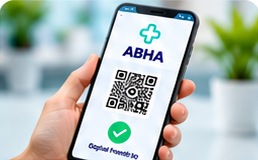
Under the Ayushman Bharat Digital Mission incentives framework, registered hospitals, clinics, and diagnostic laboratories earn financial incentives directly from the NHA based on the volume of digital health transactions linked to patient ABHA accounts above baseline thresholds. When a regional hospital digitizes its OPD registrations (Scan-and-Share), links laboratory reports from its LIMS, and generates structured e-prescriptions and discharge summaries, the platform’s ABDM transaction volume helps fund the hospital’s ongoing digital transformation—while simultaneously qualifying the facility for faster PM-JAY claim processing and NABH entry-level/full accreditation points.
Clinical Change Management: Winning Over Busy Doctors and Nursing Staff
Technology is only 40% of a regional hospital transformation; the remaining 60% is clinical change management for doctors, nurses, and billing staff. Rather than forcing every department to adopt complex forms overnight, successful Tier-2 and Tier-3 hospital rollouts follow a pragmatic, clinician-first adoption playbook:
1. Start with “Zero-Typing” Nursing Intake and Vital Pre-Population
Before the patient enters the doctor’s consultation chamber, an outpatient nursing assistant records blood pressure, pulse, SpO2, temperature, weight, known allergies, and current medications on a vitals tablet. When the consultant opens the patient’s chart, 60% of the encounter context is already populated and historical LIMS lab trends are displayed on a single screen.
2. Deploy Specialty-Specific “1-Tap” Clinical Macros
A general pediatrician’s workflow (immunization schedules, WHO growth percentiles, weight-based syrup dosing) looks nothing like an orthopedic surgeon’s workflow (fracture site diagrams, physiotherapy orders, implant tracking) or an obstetrician’s workflow (ANC trimester tracking, EDD calculation, partograph). Providing pre-built specialty macros and favorite prescription sets allows doctors to complete a structured OPD consultation in under 30 seconds—faster than writing by hand.
3. Empower Patients with Multilingual Printed & WhatsApp Prescriptions
In Tier-2 and Tier-3 communities, patients value clear, legible medication schedules in their local language (Hindi, Marathi, Tamil, Telugu, Kannada, Gujarati, Odia, or Bengali) alongside automated WhatsApp follow-up reminders. When doctors see that digital prescriptions dramatically improve medication adherence and repeat follow-up visits, clinical resistance quickly turns into championship.

Scaling Regional Hospital Groups with OneHealthGrid
Whether you operate a single 100-bed multi-specialty hospital in a growing district headquarters or a regional chain of 10 hospitals across two states, OneHealthGrid delivers an affordable, cloud-native, offline-resilient HIS/EMR platform with built-in ABDM, PM-JAY/NHCX, and multilingual capabilities—bringing world-class digital healthcare to every pin code in India.
Accelerate Your Healthcare Digital Transformation with OneHealthGrid
Looking to implement enterprise-grade interoperability, clinical intelligence, and national digital health compliance across your hospital network? Explore our OneHealthGrid Phased Hospital Digital Transformation Services or schedule a personalized architecture consultation with our healthcare engineering specialists.
National Standards & Regulatory References: Ayushman Bharat Digital Mission (ABDM) • National Health Authority (NHA) • NRCeS HL7 FHIR R4 Implementation Guides